

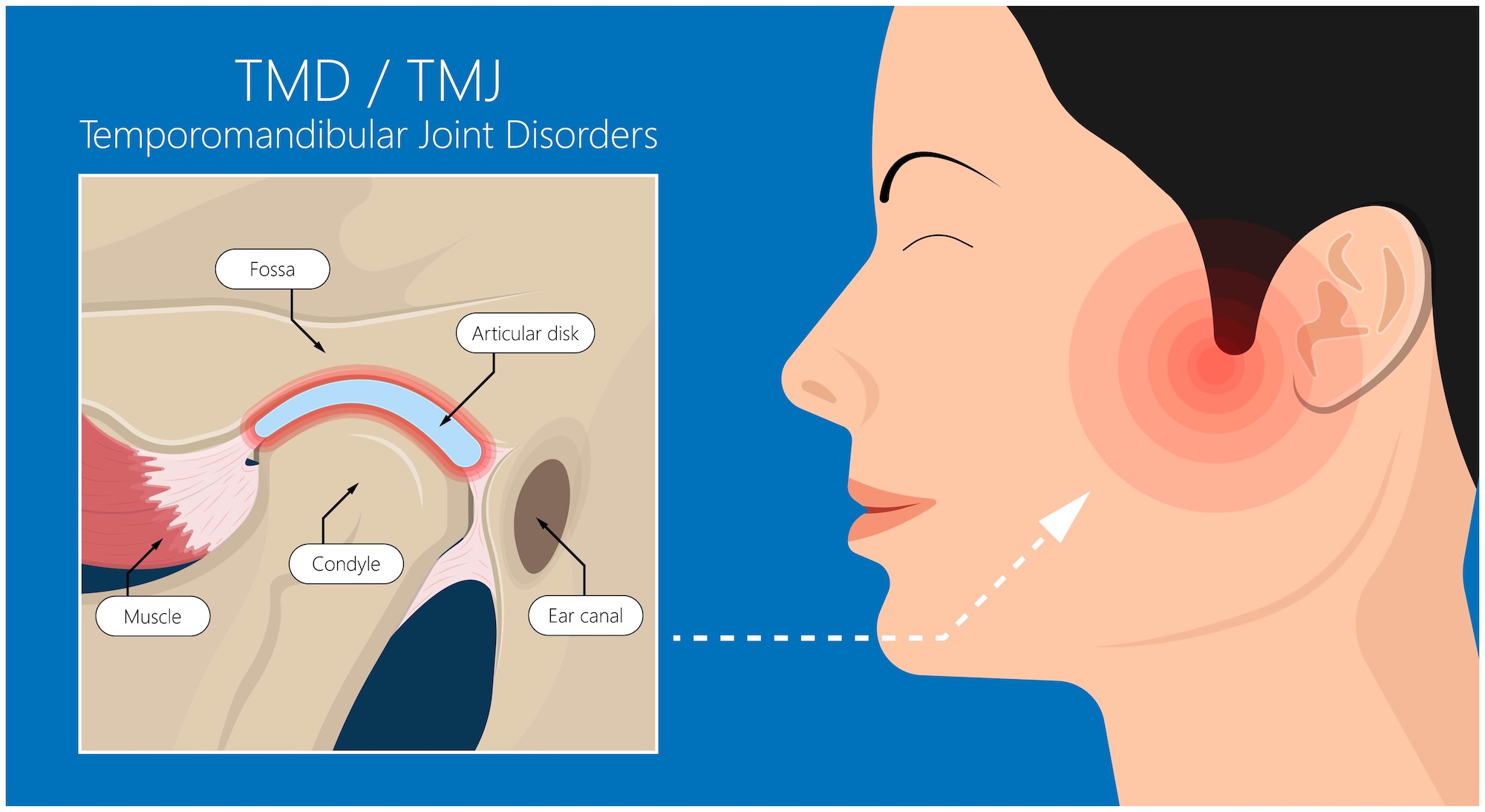
There are a variety of symptoms that may indicate TMD. Patients may experience clicking when they open their mouth, while others live with headaches, facial soreness, neck tension, or teeth that feel like they no longer come together comfortably. TMD, or temporomandibular disorder, can affect the way the jaw joint and surrounding muscles function throughout the day. At Academy Dental Care, we help patients understand whether their symptoms may be connected to the jaw and if TMD treatment may be the right next step.
TMD Can Show Up in More Ways Than Jaw Pain
One of the reasons TMD can be confusing is that the symptoms are not limited to the jaw joint itself. A poor orthopedic position of the lower jaw can cause muscles to work harder than they should, which may lead to fatigue, pain, or recurring headaches. Patients may also experience jaw clicking, popping, migraines, shoulder discomfort, neck pain, grinding, broken teeth, or an unstable bite. In some cases, symptoms such as tinnitus or vertigo may also appear, which is why a careful evaluation matters before assuming the issue is isolated to one area.
At Academy Dental Care, we look at these symptoms as part of a larger picture instead of treating them as disconnected complaints. The way your jaw opens, closes, rests, and supports your bite can influence how your muscles feel over time. When the jaw muscles are constantly adapting to an uncomfortable position, discomfort can build gradually and become easier to ignore until it starts affecting daily life.
A Thorough Diagnosis Starts With Your Symptoms
A productive evaluation for TMD treatment starts with understanding exactly what you have been experiencing. We ask about symptoms, timing, patterns, bite changes, headaches, tooth wear, and other details that can help narrow down what may be causing the discomfort. This conversation is important because two patients can describe jaw pain in very different ways, and the right path forward depends on what is actually happening with the joint and muscles. Our approach is built around listening first, then using technology to confirm what the symptoms suggest.
To better evaluate jaw movement and muscle activity, Academy Dental Care uses the Myotronics K7 Evaluation System. This technology helps us analyze how the jaw tracks when it moves and how the muscles are functioning, giving us more information than symptoms alone can provide.
Treatment Focuses on Finding a More Comfortable Jaw Position
Once we understand how the jaw and muscles are functioning, the next goal is to identify a lower jaw position that helps the muscles relax while keeping the TMJ in a healthier position during movement. Using the K7 Evaluation System, we follow a protocol that helps locate this more comfortable position instead of guessing where the jaw should rest. When the ideal position is identified, we can fabricate a custom TMJ orthotic that represents that comfortable relationship between the jaw joint and muscles. The orthotic is worn for a period of time while symptoms begin to subside and the jaw has a chance to function with less stress.
When Should You Ask About TMD?
It may be time to ask about TMD if you have ongoing jaw soreness, frequent headaches, clicking or popping, tooth grinding, unexplained tooth wear, neck tension, or bite changes that do not feel normal. These symptoms do not automatically mean you have TMD, but they are worth discussing with a dental team that understands how the jaw joint, muscles, and bite can interact. The earlier you bring up these concerns, the easier it is to evaluate what is happening and decide whether treatment is appropriate.
Ask About TMD Treatment in Albuquerque
Living with jaw pain, headaches, or bite discomfort can affect more of your day than you may realize. Academy Dental Care uses modern technology to help you understand your TMJ symptoms and find lasting relief. Request an appointment with Academy Dental Care to discuss your concerns, receive a detailed evaluation, and find out whether TMD treatment may help your jaw feel more comfortable.